|
A HISTORY OF MANIPUR POLICE
There was no formal policing in Manipur, as such, before the arrival of the British on the scene. There was a system known as the �Lallup System�, which meant free labour of the people to the King. The people were allotted a plot of land for which they were not required to pay revenue, instead had to serve the state 3 months in a year, or 10 days in every 40 days, to be precise. This service of the people was used by the King in various parts of the administration such as guards, construction work and in providing some sort of informal policing. Since the same person was not continually employed for the purpose nor paid any salary, it would be easy to appreciate that in tracking down of criminals and keeping a watch on their activities, the system was most inadequate and could hardly be called policing.
On 27th April 1891, during the reign of Maharaja Shri Kulachandra Singh, the British Government took over the administration of Manipur after a decisive battle with the ruling Prince at Khongjom. It was then that the British organized properly for the first time the State Military Police of Manipur, the fore�runner of Manipur Rifles, under Political Agent, Mr. Crawford, who was appointed the first Commandant of the force.
The strength of S.M.P as on 31st March 1893 was as follows: -
To train the S.M.P., 6 Drill Instructors were taken from Naga Hill Military Police, which was the first organized effort on training.
Further the sepoys were given regular salary and land as wages for the first time unlike in the past, when they were compensated only by grant of land in lieu of pay.
The officials of reorganized S.M.P. used to get monthly pay and land as follows:-
NB. One pari is equal to two and a half acres.
In addition each man received a seer (Kg) of rice as daily ration. They were given 12 pots of paddy per pari annually, if no land was allotted to them.
The total cost of maintenance of the force during the year 1892-93 was Rs. 39.057/- only
A little later, the Civil Police was also organized properly when Imphal Police Station was established in January 1893 having jurisdiction over the entire State of Manipur except hills. This Police Station is still functioning under the same name and is the oldest Police Station. Records show that the strength of Civil Police in 1894-95 was as follows:
The first Officer in-Charge of this Police Station was Sub-Inspector, Shri A. Ramlal Singh alias Meino Singh of Sagolband. The constables under him were posted from among the sepoys of S.M.P.
The pay of the force was as follows: -
The uniform of S.M.P. was green Pugree, Jumper, and Dhoti with brown belt. And the uniform of Civil Police was green Khaki Jumper, green Dhoti, and red saloo Pugree.
It is also said that the Eastern Bengal and Assam Police Manual was followed from 1910 or so. Further, an interesting incident was responsible for adoption of Indian Penal Code in Manipur. In 1904 residential buildings of 3 European Officers and some other housed at Khwai Bazar Imphal were set on fire, and 6 Rajkumars were convicted for this crime and sentenced to rigorous imprisonment. They served the sentence at Sylhet Jail, and when they were taken there, the Jail authorities refused to receive the convicts as no section of the Indian Penal Code was mentioned on the commitment warrants. Thereafter, the Indian Penal Code was brought into force in Manipur.
The Manipur State Darbar came into being in 1907 and the Administration of Manipur, except the British Reserve, was transferred to the Maharaja and to his Darbar. One of the members of the Darbar used to be in-charge of the Police Department and was designated as Police Member. Shri Ningthoujam Gokul Singh was the first Police Member of the State.
Shri Nabakumar Singh was the Subedar-Major of the force in the year 1909-10. In this year, the Civil Police strength had gone up to: - SI -1, HC-3 and Constable-23. The S.M.P. was armed with Tower Muskets and Martin Henry rifles. A brass band consisting of 10 men was added to S.M.P. in 1911.
Roughly the same year, Jiribam Police Station was opened on the Cachar border to prevent export of cattle and smuggling.
At that time, there were 212 Chowkidars (rural police) in the valley to assist the police. The ratio of the police, including Chowkidars, to the population of the valley was 1:924, and there was one policeman for every 2.8 square miles in the valley.
On 15th May 1911, Shri Ningthoujam Gokul Singh, the Police Member died, and the Maharaja himself assumed the charge of the Police Member until 1st December 1912 when Shri Nongmaithem Tomchouba Singh alias Shymacharan Singh became the Police Member. After some months i.e. on 31/12/1912, Shri Haobam Pitambar Singh was appointed Subedar-Major of S.M.P.
In the year 1916-17, one post of Inspector of Police was created at fixed pay of Rs. 100/- per month, and Shri Rajbabu Sharma was appointed against this post.
The First World War was going on, and the S.M.P. sent a detachment of 316 officers and men known as 'Double Company in two batches to France to assist the British Government. This detachment did a good job, and a representative group was given an audience with His Majesty, the King in London. Further, the S.M.P. helped in suppressing the Kuki rebellion, which had broken out at the fag end of 1917 on the issue of forced labour system adopted by the British Government. Some new police outposts were also opened to check this problem.
As stated earlier, the Imphal Police Station did not have jurisdiction over the hills nor over the Chowkidars posted there. But considering the need for the maintenance of law & order in hill areas, a special Police force known as Hill Lambus was then organized under the Sub-divisional Officers of Ukhrul, Tamenglong and Churachandpur.
It may be interesting to note that in 1926, the S.M.P. sent out its sports team of 16 persons to Silchar to take part in the annual Assam Rifles competition, and in all the items, these men took the first position.
The year 1929 was important for the following :- (a) one Pound-keeper and one cowboy were appointed to work under the Imphal Police Station (b) the Inspector was sent to Shillong for training in the finger Print Work (c) Shri R.K. Bhaskar Singh, the Police Member, was also appointed as Assistant Commandant of S.M.P.
In 1939 there was a women's agitation (Nupi Lan) for stopping the export of rice out of Manipur. The Police was unable to prevent a meeting held in the Police Bazar (close to present 1st MR location) in defiance of the Darbar's order because of its small strength (on 13/1/1939). The Darbar then woke up to the Police needs and added 74 Constables to Manipur Police. Almost simultaneously, Maharaj Kumar Priyobrata Singh also took over as the Assistant Commandant of S.M.P.
From 1907 to 31st May 1941, His Highness the Maharaja held the charge of the Commandant of S.M.P., and his son Maharaj Kumar Lokendra Singh acted as Assistant Commandant. On that date, it was decided to completely disband the old S.M.P. and Mr. E.E. Hughes-Hughes, IP who was appointed the first Superintendent of Police, was asked to raise and train the State Military Police on modern lines, whose strength was fixed as follows:
The members of the old S.M.P. were to be considered for appointment to the new S.M.P. only if they were found suitable and medically fit. In this year, the Prosecution Branch was also opened under SI Shri E. Tomcha Singh.
The total sanctioned strength of Civil Police at that time was 1 Inspector, 2 Sub-Inspectors, 3 Assistant Sub-Inspectors, 5 Head Constables, 5 Writer Constables and 38 Constables. There were also 238 Village Chowkidars giving a ratio of police (including Chowkidars) to population as 1:1169.02.
Of the total cost of the force, an amount of Rs. 26,618/6/-and a sum of Rs. 1,835/2/- were spent on contingencies, Rs. 2,007/3/- on traveling allowance and Rs. 22,776/1/- on the pay of the establishment.
In
1942 the flow of refugees from Burma and extension of the scene of the
Second World War to the frontiers of Manipur caused considerable
upheaval in the State and threw extra responsibilities on the Police.
The consequences of the two bombardments on Imphal Town on the 10th
and 16th May 1942 are noteworthy. After the first raid, most
of the Police force deserted their posts, and the Superintendent of
Police was forced to issue an order on May 11, suspending the functions
of the Police. There were looting in Imphal Town, and to a very great
extent, lawlessness and disorder prevailed all over the valley. A number
of dangerous criminals escaped from the Manipur State Jail during the
second raid. The Army had to be used for rounding
There were quick changes in command of the S.M. P and the Civil Police. Mr. T.A. Edward, IP was followed by Mr. S.T.Duncan, who was succeeded by Mr. C.A. Webster, IP.
A fourth Police Station was opened at Moirang in 1944. Mayang Imphal and Bishenpur were also given a Police outpost each. O.Ps at Mao and Pallel were also reopened.
Shri Kh. Dhanachandra Singh, Inspector of Police then officiating as Dy. SP was given further promotion to officiate as Superintendent of Police during the last part of 1946, and he relieved P.M.S.D. Mr. Lydall of the temporary charge he was holding both of the Civil Police and the S.M.P.
In the year 1947, the Civil Police strength was: -
The ratio of the Police including the village Chowkidars to the population of the valley was 1:926.39 at that time.
It is worth mentioning that in the year 1946, Indian Police Medals for Distinguished Conduct were awarded to Inspector Shri K. Yaiskul Singh and to ASI Ch. Khogendra Singh; Havildar Yaima Singh was also awarded Indian Police Medal for Gallantry.
On the 15th August 1947, India became free, and paramountcy of the British Government over the Indian States also came to an end. After 56 years, the Maharaja of Manipur again got full control of his administration.
In the last week of November 1947, the leftist group of the Manipur State Congress launched an agitation for the establishment of a responsible Government in the State. To deal with this situation, an additional force of 102 Constables was sanctioned for the Civil police and immediately recruitment and training were started. Shri P.C.Das Gupta of Assam Police Service also took over as Superintendent of Police from Shri Dhanachandra Singh who retired from service. At that time, a nucleus of C.I.E. was created at the Headquarters for the first time.
In August 1948, the Mao Nagas raised their demand for merger of Mao area with the Naga Hills. The agitation, however, ended with the police firing on 12/8/1948 under magisterial orders on a riotous mob, which resisted the arrests of their ring-leaders.
In the same year, the Manipur Kishan Party (Krisak Sabha) started an agitation under the leadership of Shri H. Irabot Singh for secession of the north�eastern part of Manipur from the Manipur State and establishment of an Independent Government with Headquarters at Nongada. On 21/10/48, an attempt by Shri Keisam Naran Singh, Officer- in-Charge of Imphal P.S. to arrest some of the leaders turned into tragedy, when he got killed by a gun shot fired by one of the processionists at Pungdongbam Busti, while they were proceeding towards Imphal.
In the same year on 22/10/1948, the nomenclature of the State Military Police was changed to the Manipur Rifles by a resolution of the State Council.
At the time of integration of Manipur with India on 15th October 1949, Manipur had only 5 Police Stations and 7 Outposts. The strength of the Civil Police and the Manipur Rifles was as follows:-
CIVIL POLICE
MANIPUR RIFLES
The Superintendent of Police was also the Commandant of Manipur Rifles.
In the year 1949, Shri S.C. Palit took over from Shri P.C.DasGupta as Superintendent of Police. During this period, the Communist Party of India continued its agitation in the valley area. Some people also indulged in violence. Police Station Mayang Imphal was raided by a group of leftists, armed with rifles and Sten guns on 28/4/51, but the attack was repulsed successfully. The leaders of the agitation were arrested and sentenced to various terms of imprisonment. The movement gradually died down due to the efforts of the police.
In 1953 Civil Police and Manipur Rifles were reorganized. The armed branch of the Civil Police was merged with Manipur Rifles, which was declared as the armed wing of Manipur Police.
In 1954 Shri U.C. Malhotra, IPS succeeded Shri Palit, and the post of Superintendent of Police was designated as Inspector General of Police.
That year the P.S.P launched an agitation for the installation of legislature and dissolution of the Advisory Council in Manipur. Gradually the agitation spread out to hills. Dr. Lohia visited Manipur, and it was during his trial that the Court of Hon'ble Judicial Commissioner, Manipur declared that the Criminal Procedure Code was not in force in Manipur. The Cr. P.C. was then brought into force with effect from 26th April 1955. This movement also gradually subsided, and Police played an important role in containing the situation during this period.
This year, a change was also introduced in the uniform of ASIs, SIs and Inspector of Police. Five pointed stars with red and blue ribbons were prescribed on shoulders along with prescribed stars for these ranks.
Shri N.C. Ghose, IPS became the Inspector Genera of Police in January 1956.
In that year, the Government of India sanctioned two posts of Additional Superintendent of Police, and Sarvashri Harnam Singh and L. Gopal Singh were the first incumbents.
During this period, a section of Nagas of Naga Hills and Tuensang areas under the leadership of Z. Phizo made a demand for full-independence of Nagaland and started hostile activities for the achievement of the same. When chased hard by the forces there, the Naga-hostiles began to infiltrate into the adjoining areas of Manipur in the later part of 1956 and started hostile activities there also.
Two companies of the Eastern Rifles were then obtained from West Bengal to meet the situation created by hostiles, and E.F.R camps were opened at Tamenglong, Jampi, Magulong, and Twaiwaichong, all in Tamenglong Sub-Division. For the first time, a Police Wireless grid was also opened at that time.
The hostile activity in Tamenglong, Mao and Ukhrul Sub-Divisions was becoming stronger. On 7th April 1957, Mao Police Station and Manipur Rifles camp there were raided by the hostiles in the early hours of the morning. The Manipur Rifles boys exhibited extra-ordinary courage and repulsed the attack after an exchange of fire between the two sides for about 3 hours from a close range. Only at dawn, the Naga-hostiles withdrew from their positions.
In the later part of 1957, Shri N.K. Chowdhury, retired IP became the Inspector General of Police. An important addition to the Manipur Police was the Fire Services Organization during this year. It made a moderate start with one Station Officer, two leading firemen and 24 firemen with the two Fire Fighting Units.
Rana Harnam Singh succeeded Shri Chowdhury as Inspector General of Police in May 1958. Shri Bijai Singh of U.P. Police Service was the next IGP with effect from 16th October 1958.
In 1959 Naga-hostiles activity had assumed serious proportions, and Manipur Police had to work hard to cope with the situation. The following Police Stations and outposts were opened during the year 1958-59:-
During this year, there were many encounters with the Naga hostiles in Tamenglong Sub-Division where the Manipur Rifles and Civil Police exhibited extra-ordinary courage and devotion to duty. During the encounter, quite a few police lives were lost, but there were quite a few losses on the side of insurgents also.
On 25th May 1959, Shri L. Gopal Singh became the Inspector General of Police. On 17th March 1960, the post of Inspector General of Police was re-designated as Superintendent of Police of Manipur and D.C. was to discharge the functions of IGP under the Police Act of 1861 .The SP, however, was to be Head of the Police Department. In 1959 a Tear Gas Squad was raised in Manipur Rifles. It had a total strength of 2 JCOs and 22 other ranks.
In 1960 Police had to face a lot of stress and strain in controlling clashes between Kukis and Hmars in Churachandpur, Jiribam and Tamenglong Sub-Divisions. But with the help of the Bihar Military Police, this situation was controlled. Again the Socialist Party and the Communist Party launched demonstrations demanding the Assembly. These situations were also tackled. Further, there were some encounters, as well, with the undergrounds.
In 1961 Ukhrul, Mao-Maram and Tamenglong Sub-Division were declared disturbed areas under Section 3 of the Armed Forces (Assam & Manipur) Special Powers Act 1958, and army took over the control of operations in these areas.
The West Bengal Security Act was also brought into force in June 1961. These measures combined with the arrest of some important leaders of the hostiles proved very effective in maintaining law & order. One of the results was the surrender of a large number of hostiles with weapons.
In August 1961, a Women Police Squad consisting of one Head Constable and 6 Constables was raised considering the need of tackling women demonstrations in various agitations.
Side by side, the Manipur Police took part in cultural and sports activities. In 1959 Shri Bijai Singh led a team to the First All India Police Welfare and Cultural Meet at Nainital. This team secured the first position in folk dance and handloom exhibition. In 1961 Shri LH. Harnett, Commandant, Manipur Rifles took the team to the same meet at Ooty, and Manipur Police secured positions again.
The Manipur Police team participated in the All India Police Meet at Barrackpore in 1961. Same year in July, the Manipur Police joined a pilgrimage party, consisting of 11 policemen from different states to Hot Springs to pay homage to the personnel of CRP killed by the Chinese on 21st October 1959.
The strength of Civil Police in 1961 was 869 excluding G.Os. as compared to 369 before the merger of Manipur State with the Indian Union.
The Manipur Rifles also grew gradually and had a full-fledged Battalion in 1961 with 4 G.Os and 960 other ranks.
The total expenditure on police was as follows in 1961:-
District Executive Force - Rs. 22,85,100/- Manipur Rifles - Rs. 18,33,800/-
In the same year, Shri L. Gopal Singh, the then SP brought out a booklet on the History of the Manipur Police.
The law and order situation in the hill areas of Manipur noticeably improved during the later half of 1961-62 as a result of the effective action taken by the security forces against the Naga hostiles, who had committed a number of serious crimes such as dacoity, murder, kidnapping, etc.
The hostiles also tried to obstruct free and fair elections during the General Elections of 1962, but did not succeed because of the alertness of police and security forces.
The most important event during 1962-63 was the increase of the strength of Manipur Rifles by another battalion (2nd Bn.MR), which was raised on 1st November 1962. Another important event was raising for the first time of Civil Police Reserve Line at Lamphelpat with newly sanctioned posts of one Inspector, 1- SI, 25 - HCs and 150 - Constables.
Similarly, the Home Guards Organisation was also set up with a sanctioned strength of 1 AC, 1 Subedar, 1 Jamedar, 17 other ranks and 400 members to help in maintaining internal security in the hill areas. The total strength of members for both the valley and hill were fixed at 2300 and training of urban Home Guards was taken up in right earnest.
As many as 30 armed encounters took place in 1962-63 between security forces and Naga hostiles, during which 9 hostiles were killed and 225 including some important leaders like Ahang (Governor) of Ukhrul area were captured. On the side of security forces, 2 riflemen were killed and 2 injured. Some arms and ammunition were also captured.
In 1964 Shri L. Gopal Singh, IPS, who was the Police Chief as S.P. Manipur, joined S.I.B. Kohima, Nagaland, on deputation after handing over charge to Shri Tiwari from Bihar Police Service. Shri Tiwari, unfortunately, died in Manipur, a little later. Shri K.R. Rajgopalan, IPS from Madras cadre then took over as SP Manipur, after a little gap.
In
1965 the post of a full-fledged IGP was created, and Shri J.R. Chhabra.
IPS from Punjab cadre took over on 1/7/65 and served till 21/4/66.
During his tenure, the most
In Manipur, land was also earmarked for these battalions at Churachandpur and Pallel areas. However, these two battalions got merged with the BSF as 95 Battalion and 96 Battalion BSF, respectively in March/April 1968.That is why in the present numbering of Manipur Rifles Battalions, 3rd and 4th Battalions, are missing The land earmarked at Pallel and Churachandpur for these Battalions continues to be with BSF even today.
On 21/4/66, Shri Mahendra Singh, IPS from U.P. cadre took over as IGP from Shri J.R. Chhabra, who went back to his cadre. During 1966-67, Manipur Police Training Centre was established.
In 1968-69 the Police action against hostiles was very encouraging. Ukhrul Sub-Division was cleared of hostile activities, and in Mao civil administration was restored. Due to intense pressure, 301 Naga hostiles surrendered, 439 were captured and 15 got killed in encounters with the police and VVF (Village Voluntary Force). A large quantity of arms and ammunition were also recovered, including 535 guns and rifles. In operations against Naga hostiles, 5 police personnel and 7 WF persons laid down their lives.
The CID was also reorganized during this year and fresh appointment was made in various ranks up to the rank of DIG. The G.Os were taken on deputation for this unit.
During this period, a police museum was established in MPTC campus where a large number of captured arms and ammunition were displayed. This, somehow, got completely neglected till it was re-established in 1991.
The welfare activities also increased by way of establishment of welfare centres in MR. Bns and other activities during this period.
Shri Madan Gopal Singh, IPS from Punjab cadre took over as IGP on 9/4/69 from Shri Mahendra Singh, who went back to his cadre. His tenure till 30/9/75 was quite eventful, and he retired from service from Manipur itself.
During 1969-70, the demand for statehood of Manipur became violent. A black flag demonstration was also staged before the Prime Minister of India, Smt. Indira Gandhi on 23rd September 1969 when she visited Imphal. The police had to open fire to control the mob. During this period, the subversive revolutionary groups also came out with different names. The Police had a tough time in controlling the activities of Meitei State Committee and R.G.M. (Revolutionary Govt. of Manipur), in addition to handling the agitation for statehood by different political parties and students.
The President's Rule was imposed in the territory on 16/10/69 and continued throughout the year 1969-70. The mid-term poll to the Lok Sabha was held in Manipur on 1st, 4th and 7th March 1971. Unlike the previous general elections, which were marred by clashes between the undergrounds and security forces, the poll, because of elaborate police arrangements, was completely peaceful.
Law and order situation both in the valley and hill areas, except North District, showed marked improvement. There was, however, considerable dislocation of the force because of the agitation for statehood. But, the situation remained under control. The hostiles suffered further set back in all areas of Manipur as a result of effective pressure maintained on the remnants of the undergrounds by the police. A large number of hostiles and weapons were captured.
The whole set up of Manipur Police was reviewed by Shri A.K. Basu, the then IG BSF in May 1970, and he recommended increase in the strength of Imphal Police Station and strengthening of CID and PHQ. WF continued to be under the operational control of Police Department and did a lot of good work. There was reorganization of WF units also depending upon administrative factors.
In sports, Manipur Police participated in East Zonal Tournaments of Police Meet in football, volleyball, basketball and athletics and bagged championship of volleyball for the first time. Performance in other events was also good. A rifleman of Manipur Rifles was declared for the first time as second best muscleman in All India Contest held at Calcutta.
Meanwhile, the Prime Minister of India had on 3/9/70 promised grant of statehood of Manipur. The announcement resulted in the termination of agitation launched by political parties for statehood and diverted their attention to the impending elections to the 1st Vidhan Sabha of Manipur State. The Bill conferring the status of state on Manipur as introduced in Parliament on 9/12/71, which after being passed by both Houses of Parliament, was assented to by the President of India on 21/1/72. The State of Manipur was formally inaugurated by Smt. Indira Gandhi, the then Prime Minister of India at Imphal on 21/1/72. Shri B.K. Nehru was sworn in as the first Governor of Manipur on that date.
The Elections to the 1st Vidhan Sabha was held on 6th, 9th and 11th March 1972 and the police made elaborate arrangements with the result that the elections were peaceful. In all, 261 candidates contested the 60 Assembly Seats. Shri Md. Alimuddin of MPP was elected leader of the United Legislative Party consisting of a few political parties and became the Chief Minister of Manipur.
On the law and order front, the Meitei State Committee, which was badly mauled in 1970-71, ceased to exist during 1971-72 with the surrender of its top leaders in May 1971. Some members of another organization namely RGM (Revolutionary Government of Manipur) reached Jiribam, possibly for want of other suitable harbour after the liberation of Bangladesh, with a large quantity of arms and ammunition. The self-styled leader and some of his lieutenants were arrested there as a result of an excellent follow-up by the police. Another top-ranking leader was also arrested by the police at Imphal. This finished RGM almost completely. Thus, the police achieved a great success in almost eliminating these two underground organizations.
In order to improve the police functioning, a post of Superintendent of Police (Operations) was sanctioned. This provided the Dy. IG of Police with a senior staff officer, besides some other posts.
During 1972-73, separate Superintendents of Police were posted in Manipur East, Manipur West, Manipur South and Manipur North Districts. Hitherto, Manipur as far as police was concerned, was a single district state. With the posting of Superintendents of Police in the above mentioned four hill districts, the Superintendent of Police, Manipur was re-designated as Superintendent of Police, Manipur Central. On 1/4/72 Shri T.J. Quinn Dy. IG was repatriated to the BSF and Shri L. Gopal Singh was appointed as Dy. IG of Police.
A scheme for reorganization of Police Department was also approved by the government, and according to this, the police was to have 44 Police Stations as against the existing 17 Police Stations, and 21 SDPOs as against 7 at that time. The police and Manipur Rifles were also given some additional transport.
During this period, 5th Bn. Manipur Rifles was raised on 19/12/72 and trained at Pangei. Its headquarters was also established at Pangei.
On the law and order front, the Government announced general amnesty to the underground elements after the dismemberment of R.G.M. Under this clemency, 55 persons were released from the jail. Some of the members of this organisation, however, continued to be underground. Further, Manipur continued to be free from the menace of Mizo-Kuki hostiles. The Naga underground also suffered further set-back during this year. Thus the police was on top.
Manipur again came under a spell of President's Rule from 28/2/73 to 4/3/74. Mid-term poll was held in February 1974, and elaborate security arrangements were made along with army and 2 Bns each of BSF and CRPF. In hill areas, where the hostiles were expected to intervene in a big way to secure victory of pro-hostile candidates; extensive operations were launched. The result was a free, fair, and a peaceful election.
Shri Md. Alimuddin again became the Chief Minister of a coalition ministry of a few political parties.
Shri B. Lal, IPS from Rajasthan cadre took over as IGP on 12/11/75 on the retirement of Shri Madan Gopal Singh. He continued to serve the state till 2/4/81.
The valley areas remained peaceful from insurgency during mid seventies, but not the hill areas. The Naga hostiles were quite active in Manipur North, Manipur East and Manipur West Districts.
During this period, Manipur Police Radio continued to progress and opened 62 HF and 16 VHF stations. Some major equipment was also purchased under the modernization scheme during this period.
During 1976-77, following the signing of the Shillong Peace Accord in November 1975 by the Underground Nagas, there was comparative peace. Sporadic incidence of violence, however, continued to take place as there were still some elements that were opposed to the accord.
To augment the strength of the Police, 6th Bn. MR was raised on 16/3/78 with its HQs at Imphal. The battalion was trained in Imphal and deployed soon after its passing out parade.
During 1978-79, 13 Police Outposts were opened in Central District to control the activities of the Meitei extremists under the leadership of N. Bisheswar Singh, who wanted to revive the subversive activities of the called R.G.M. A group of 16 Meitei youths led by him went to Lhasa secretly for training sometime in 1976 and after returning to Manipur committed a series of crimes. Their organisation came to be known as PLA (People's Liberation Army) - the name of the Chinese Army. Following their violent activities, the whole of the Central District was declared disturbed area on 21/7/78. A few other insurgents groups like PREPAK, etc. also emerged, and they continued to indulge in violent activities such as looting, murder, snatching of arms and extortion, etc. The police mounted a relentless attack on these organizations and achieved a great deal of success. With a view to augment the strength of the police, 7th Bn. MR was raised on 11/8/80 with its Hq. at Khabeisoi at Imphal.
In January 1980, the election to the Manipur Legislative Assembly and the 2 (two) Lok Sabha seats were held peacefully. Shri R.K. Dorendro Singh became the Chief Minister of the Congress-l led coalition ministry at that time.
The jurisdiction of the SDPOs was reorganized and some temporary posts of Inspectors, SIs, HCs, Constables were also created. For Police Housing, a sum of Rs. 16.50 lakh was received from the Central Government, and some family quarters were constructed.
In sports, the hockey team got runners-up position in the All India Hockey Tournament held at Guwahati in the last week of October 1979.
In 1980-81, the activities of the subversive Meitei extremist groups namely PLA, PREPAK and KCP assumed serious proportions. They carried out 21 ambushes and killed 67 persons, in addition to injuring 57 persons. Those killed and injured included men of Civil Police, Manipur Rifles, CRPF. RAC, Army, and civilians. They also took away some weapons while committing these crimes. The police, however, reacted with determination and achieved a great success. They killed 25 insurgents and captured 440 insurgents. A large number of arms and ammunition were also captured. As a result of this pressure, 83 insurgents surrendered to the authorities, as well.
Simultaneously, the Underground Nagas also resumed their violent activities especial in the Manipur East District. There was a very fierce ambush on an Army convoy on Imphal-Ukhrul road in which Army lost 20 personnel and large number of weapons,
In the Manipur South District, the Mizo National Front was active and indulged in collection of money/ration, etc. from the villagers bordering Mizoram.
The political situation was also unstable after the revocation of the President's Rule imposed from 28/2/81 in the state. In the month of June 1981, a Congress Ministry led by Shri Rishang Keishing as Chief Minister was again sworn in.
In this year, to make policing further effective, a City Police Control Room was established on 14th July 1981 at Imphal. Round-the-clock patrolling by mobile vans was introduced in the city and communication network with outer areas and other districts with the Control Room was also introduced. Nine out�posts were established on the outskirts of greater Imphal to provide security to the public and also to flush out the Meitei extremists from these affected areas. These steps were a major success and improved the law & order considerably.
Shri H.C. Almeida from Maharashtra Cadre took over as IGP on 3/4/81 after the transfer of Shri B. Lal and served till 31/7/82. During his tenure, the insurgency in the valley was almost at its peak.
In January 1982, Crime Branch was established as an independent unit under the overall charge of DIGP (CID) at Imphal. This was a significant addition to the police set-up.
During 1982-83, the security forces and the police achieved considerable success in their operations against the Meitei extremist groups. The activities of Meitei extremist groups were reduced to a very low profile. PREPAK and KCP became almost defunct, and PLA suffered a severe blow after several casualties and arrests of some of its top leaders in Tekcham and Kodompokpi areas.
In order to handle the increasing load of duties efficiently, a post of Asstt. IG of Police (Provisioning) was created at the Police Headquarters in 1982-83.Shri J.S. Kand, IPS of Madhya Pradesh Cadre took over as IGP on 18/8/82 and served till 19/8/85. By 1983-84 the general law & order was sufficiently under control and the activities of the insurgents had considerably reduced as a result of the efforts of the police and security forces. The Mizo National Front, which used to take shelter in Churachandpur, did not enter Manipur after the arrest of one of their leaders. NSCN also suffered serious reverses during the year.
Many remarkable improvements in the Police Wireless and communication system were made during this year. Two Repeater Stations, 13 Static Stations and 18 Mobile Stations were installed raising the total number of Radio Stations in the state to 145 as on 25/1/84. For the first time in the state, Radio Teleprinter Circuit interlinking the State Capital and the entire hill district was commissioned. The circuit using indigenous instruments incorporating a number of modifications was devised locally by Shri N.K. Nair, the Director of Police Wireless. He also set up a small Research and Development Section in his unit. With this, the Manipur Police could legitimately claim to be one of the best in the country in the matter of communication.
With a view to bringing about a reorientation in the outlook and attitude of the police in changing circumstances, the police personnel of various ranks were deputed to different police training institutions for refresher, specialized, promotion and in-service courses, etc. from time to time.
Shri V.P. Kapoor, IPS of U.P. Cadre took over as IGP from Shri J.S. Kand on 10/9/85.
In 1986 two important additions were made to the functioning of the Police Department. In April 1986, Manipur Police Housing Corporation was established as a separate body to look after construction of police buildings. Soon after in September 1986, a Central Motor Transport Workshop was also established for repairing vehicles of the Police Department under one roof and command in Imphal itself.
In the wireless communication locally development highway repeaters using available equipment were installed at vital points along Imphal-Dimapur, Imphal-Moreh and Imphal-Jiribam roads.
On the training front, many recruits have been imparted training. The MPTC was renamed as MPTS in July 1986.
The government also sanctioned 2 posts of Dy. SP for the State Crime Record Bureau, one of whom was to work as Dy. SP in-charge of Finger Print Bureau. These two were part of the Crime Branch, which had been established in 1981-82.
1987-88 saw a lot of progress in the Manipur Police set-up. A forensic science laboratory was established, Border Affairs PS was opened and a separate dog squad became functional for the first time in Manipur.
The post of IGP was upgraded to DGP with effect from 29/2/88, and Shri V.P. Kapoor, the then IGP became the first incumbent.
On 14/6/91, Shri A.V. Liddle, IPS of M.P. Cadre took over as DGP of the State. He joined the Manipur Police just when the centenary year celebrations of Manipur Police were round the corner. The year long centenary celebrations have been going on in full swing, consisting of inauguration ceremony, sport events, debating competition, sanction of medals, photo competition, preparation of documentary film, etc.
During the last many years, Manipur Police have grown by leaps and bounds. They have earned a great reputation for themselves in dealing with difficult situations, especially insurgency. Since the late 50s, they have been fighting with one insurgency or another and doing an excellent job. They have won laurels for the State. Of course in this call of duty, the police have laid down many lives. Manipur Police paid homage to their great martyrs during this centenary year.
A hundred years is an important milestone in the history of any institution-more so in the life of a police force. The 1st Battalion of Manipur Rifles is probably the only armed police battalion among the police forces in India that has completed 100 years of its existence.
The Centenary Year which started with a colourful parade on 19th October, 1991 and finally closed with the colour presentations on 19th October, 1992.
Officers who had served as DGP of Manipur State since 29-02-1988:-
NB. L. M. Khaute, IPS has assumed the charge of DGP Manipur in the afternoon of 01-01-2016.
--- ( ) --- |
|||||||||||||||||||||||||||||||||||||||||||||||||||||||||||||||||||||||||||||||||||||||||||||||||||||||||||||||||||||||||||||||||||||||||||||||||||||||||||||||||||||||||||||||||||||||

 up the dacoits and the escaped prisoners. The Police force was
eventually got together again on May 27. Meanwhile, both the Civil
Police and the S.M.P. buildings had been taken over by the Army. The
Superintendent's office as well as the Police Station Imphal had to be
accommodated at the house of Inspector Shri Dhanachandra Singh of
Kwakeithel. Police outposts at Mao, Sekmai and Pallet were also
abolished. On 11/7/42, Mr. E. E. Hughes-Hughes handed over the charge of
the office of Superintendent of Police to P.M.S.D. Mr. T.A. Sharpe ICS
and left Manipur. Only in 1943, the building of Police Station Imphal
was vacated by the Army. The S.P's office also moved to the S.M.P.
Quarter-Guard building. Soon after, Mr. T.V. Clark got the Command of
S.M.P. The main responsibility of the S.M.P. during the war was to guard
the Palace and that of Civil Police to assist the Army and to perform
functions of the Civil Police. Amongst many temporary measures taken
then was the opening of a third Police Station at Wangjing in 1943,
which was later shifted to Thoubal. it would be useful to insert here
one extract from the Annual Administrative Report for the year 1943-44
regarding the Police activities. "During the Japanese incursion in 1944,
the Civil Police did excellent work and more than recovered reputation
they had forfeited in 1942. The evictions of civilians from battle area
at short notice, sometimes under fire from the Japanese, were carried
out efficiently and without complaint. Many members of the force did
good work with military units. Altogether, the Manipur Police could be
proud of the part they played in these critical days".
up the dacoits and the escaped prisoners. The Police force was
eventually got together again on May 27. Meanwhile, both the Civil
Police and the S.M.P. buildings had been taken over by the Army. The
Superintendent's office as well as the Police Station Imphal had to be
accommodated at the house of Inspector Shri Dhanachandra Singh of
Kwakeithel. Police outposts at Mao, Sekmai and Pallet were also
abolished. On 11/7/42, Mr. E. E. Hughes-Hughes handed over the charge of
the office of Superintendent of Police to P.M.S.D. Mr. T.A. Sharpe ICS
and left Manipur. Only in 1943, the building of Police Station Imphal
was vacated by the Army. The S.P's office also moved to the S.M.P.
Quarter-Guard building. Soon after, Mr. T.V. Clark got the Command of
S.M.P. The main responsibility of the S.M.P. during the war was to guard
the Palace and that of Civil Police to assist the Army and to perform
functions of the Civil Police. Amongst many temporary measures taken
then was the opening of a third Police Station at Wangjing in 1943,
which was later shifted to Thoubal. it would be useful to insert here
one extract from the Annual Administrative Report for the year 1943-44
regarding the Police activities. "During the Japanese incursion in 1944,
the Civil Police did excellent work and more than recovered reputation
they had forfeited in 1942. The evictions of civilians from battle area
at short notice, sometimes under fire from the Japanese, were carried
out efficiently and without complaint. Many members of the force did
good work with military units. Altogether, the Manipur Police could be
proud of the part they played in these critical days".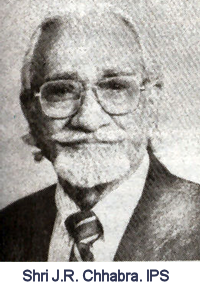 important event was the raising of the 3rd and 4th
Bn. Manipur Rifles starting from August 1965. These two battalions were
raised at Imphal, Patna and Indore, respectively. Two coys of each of
these two battalions were raised at these places and also trained at
these places. In Imphal, they were trained at Pangei and at Patna along
with 5th Bn. of BMP (Bihar Military Police) and at Indore in
CSWT (Central School of Weapons arid Tactics) being run by Madhya
Pradesh Police.
important event was the raising of the 3rd and 4th
Bn. Manipur Rifles starting from August 1965. These two battalions were
raised at Imphal, Patna and Indore, respectively. Two coys of each of
these two battalions were raised at these places and also trained at
these places. In Imphal, they were trained at Pangei and at Patna along
with 5th Bn. of BMP (Bihar Military Police) and at Indore in
CSWT (Central School of Weapons arid Tactics) being run by Madhya
Pradesh Police.
Home | Branches | Photo Gallery | Press Releases| Tender | Awardees| News | Contact Us